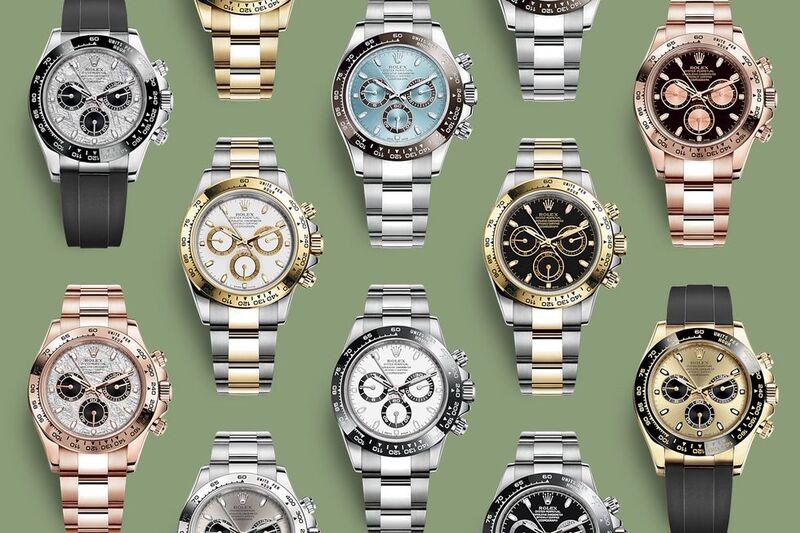
The Rolex Daytona: A Timeless Legend in the Automotive World
When it comes to iconic timepieces that embody the spirit of both precision engineering and automotive excellence, the Rolex Daytona stands as an undisputed legend. Renowned for its striking aesthetics, exceptional functionality, and deep-rooted motorsport heritage, the Daytona has solidified its place as one of the most coveted and sought-after luxury chronographs in the world.
A Legacy Born from the Racing Track:
Introduced in 1963, the Rolex Daytona was initially designed for professional racing drivers. Its name pays homage to the famous Daytona International Speedway in Florida, a hallowed ground where speed records were shattered and motorsport history was made. Rolex, as a brand, had already established a reputation for crafting robust and reliable timepieces, and the Daytona was no exception.
The Iconic Design:
The Daytona's design is a seamless blend of elegance and functionality. The watch features a sleek, timeless dial with three sub-dials that serve as chronograph counters, providing accurate measurement of elapsed time, making it indispensable for racing purposes. The tachymeter bezel, another essential feature, allows drivers to measure average speeds over a known distance - a feature that distinguishes the Daytona from other luxury timepieces.
A Star on the Wrist of Legends:
Over the years, the Rolex Daytona has found its way onto the wrists of numerous racing legends and celebrities, further enhancing its allure. From the legendary actor and racer Paul Newman to Formula 1 champions like Jackie Stewart and Ayrton Senna, the Daytona has been embraced by those who appreciate the fusion of horological mastery and motorsport prowess.
The Paul Newman Connection:
Perhaps one of the most significant factors contributing to the Daytona's cult following is the "Paul Newman" Daytona. The story goes that Paul Newman's wife, Joanne Woodward, gifted him a Daytona with an art-deco style dial in the late 1960s. It wasn't until the 1980s that collectors and enthusiasts dubbed this particular dial style the "Paul Newman" dial, skyrocketing its desirability among watch aficionados.
Evolution and Innovation:
Throughout its history, the Daytona has seen several advancements and improvements. Early models were powered by manually-wound movements, but in the late 1980s, Rolex introduced automatic movements, significantly enhancing the watch's convenience. The introduction of precious metal options and innovative materials like Cerachrom ceramic bezels further expanded the model's appeal to a wider audience.
Continuing the Legacy:
Rolex continues to refine and evolve the Daytona to this day, incorporating state-of-the-art technology while staying true to the original design philosophy. The latest iterations feature robust, in-house movements with enhanced power reserves and the iconic aesthetics that have made the Daytona an evergreen symbol of luxury and performance.
Conclusion:
The Rolex Daytona is more than just a timepiece; it is an emblem of speed, precision, and sophistication. Its storied past, combined with the brand's commitment to excellence, has solidified its position as a true icon in the automotive world. Whether on the wrists of racing legends or watch enthusiasts, the Daytona's timeless allure continues to transcend generations, and it remains a symbol of the enduring relationship between the worlds of horology and motorsport.