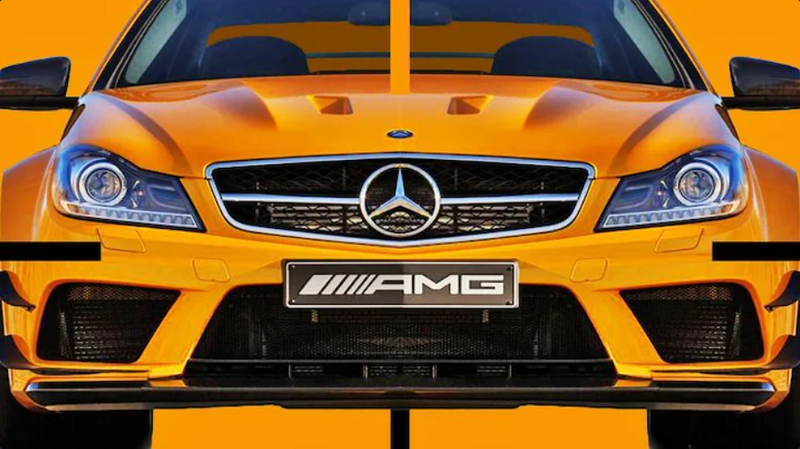
History of the AMG Black Series: Mercedes' Most Potent Track Terrors Explained
When AMG’s engineers were let off the chain, these wild supercars and coupes were the result.
Nearly every automaker who plays in the high-performance pool typically goes out of its way to produce at least one or two special models that represent the pinnacle of what the company’s engineers are able to accomplish. These are the most focused versions of a particular vehicle, highly tuned machines that illustrate what’s possible on a racetrack or otherwise when the reins are removed.
At Mercedes-Benz, for the better part of the past 20 years that torch has been carried by the AMG Black Series, the top dogs of the in-house hot rod division’s lineup. It’s an ultra-exclusive, low-production VIP club that only a handful of Silver Star cars have ever been allowed to join.
Origins of the AMG Black Series
In 2006, Mercedes-Benz was at something of a crossroads with its AMG division. The hi-po arm of its luxury empire had until that point primarily focused on stuffing enormous power under the hood of any model that the mothership saw fit to send its way, which meant that while there were ultra-quick versions of vehicles as diverse as the C-Class and the SL-Class, few of these models could lay claim to the same kind of focused handling and balanced performance delivered by the most dedicated high-performance versions of the Porsche 911 or even the Chevrolet Corvette.
At the time, AMG had been working on building a factory race car to compete in a series called The Ultimate Experience Asia, a process that called for the removal of many of the comfort features and extraneous equipment traditionally called for by a roadgoing model. The end result—the Mercedes-Benz SLK55 AMG Tracksport—would serve as the basis for the very first AMG Black Series car.
Mercedes-Benz SLK55 AMG Black Series
The 2006 Mercedes-Benz SLK55 AMG Coupe Black Series split the difference between the not-so-street-legal aspects of its Tracksport sibling and the need to at least make a gesture toward daily drivability and modern safety regulations. Gone were the racing harnesses pinning driver and (optional) passenger to their seat, the roll cage, and the oversized, trunk-mounted fuel tank, but carried over were the Tracksport’s fixed roof (made from carbon fiber), flared fenders, and lightweight 19-inch wheels. Black Series models are only two doors and traditionally lack foglights. In their place are a plethora of air vents intended to help cool its brakes, which in the SLK55 Coupe Black Series were expanded to six-piston fixed caliper designs up front.
The SLK55 AMG’s standard 5.5-liter V-8 was bumped to 400 horsepower and 384 lb-ft of torque thanks to a more complicated valvetrain, intake, and exhaust setup. Matched with a seven-speed automatic transmission and a height-adjustable suspension, the car had a top speed of 173 mph and could hit 60 mph from a standing start in 4.5 seconds. Mercedes-Benz only built 120 or so of the original SLK55 AMG Black Series, and none were imported to America.
Fun fact: Most of the cars came with the mechanism for the SLK’s retractable roof still stuffed into the trunk, a testament to the laziness of dealers who had been charged by AMG with removal duties prior to customer delivery.
Mercedes-Benz CLK63 AMG Black Series
The next Black Series model again counted on a racing series to help shape its performance envelope—though not in the same way as its predecessor. This time, AMG turned to its Formula 1 safety car for inspiration; the result was the 2008 CLK63 AMG Coupe Black Series. It also decided to make it available to customers around the world, with 700 examples sold.
There are vestiges of track car styling to be found when examining the profile of the CLK63 AMG Black Series, particularly its beefy fenders that serve as a callback to the DTM touring competitors campaigned by the brand. Forged 19-inch rims were once again the order of the day, as were 14-inch brakes up front and 13-inch units at the rear, with the SLK’s trick suspension setup also carried over. The carbon-fiber roof was nowhere to be found, but as a consolation, owners were treated to cabin inlays and exterior vents made from the same material.
The CLK63’s fire-breathing 6.2-liter V-8 was imported to the Black Series, but again the AMG engine had been sent to the gym—or at least back to the company’s hand-built assembly line—where it had a new dual-intake manifold installed along with a throatier exhaust system. Rated at 500 horsepower, the CLK63 Black Series engine relied on a seven-speed automatic to handle the gear shifts on its way to a 4.3-second 0–60 time and a top speed of 186 mph.