Boss Hoss: The Dodge Charger That Time (and Everybody Else) Forgot
It’s human nature for hardcore muscle car fans to immediately think 1968–1969 if/when Dodge Chargers are being discussed. Hands down, those two model years are the icons, based on their styling and performance.
The cars’ popularity, especially throughout the Mopar sect, is also bolstered by their appearances in high-speed police-pursuit scenes of popular films and television shows of the 1960s, '70s, and '80s (Bullitt/'68, Dirty Mary, Crazy Larry/'69, The Dukes of Hazzard/'69, etc.).
Some enthusiasts, especially younger people who immediately identify with the modern period’s “Hellcat” Charger sedan and believe those TV cars are the only OGs are totally unaware that '68-'70 is actually the Charger’s second generation. That’s right—the car was introduced as a midsize sports coupe in 1966, a spinoff of the Dodge Coronet.
As Mopar muscle cars go, the 1967 model is the first Charger that could be ordered with a 440-cubic-inch V-8 engine. At 375 horsepower, the '67's 440 Magnum was the big-block that essentially split the performance difference between the 325-horsepower, 383ci V-8 and the venerable 425-horse, 426 Hemi engines that had already been in play for a year (Hemi-powered '66 Chargers were nicknamed “Boss Hoss”).
The power was there, but the cars’ pseudo futuristic (for the mid-1960s) exterior and interior styling wasn’t very endearing to the buying public. Dismal sales prompted the 1968 redesign that, when coupled with a big block and four-speed manual transmission, as well as the aforementioned starring roles in Hollywood, ultimately earned Charger its “badass” cred. And the rest, as they say, is history.
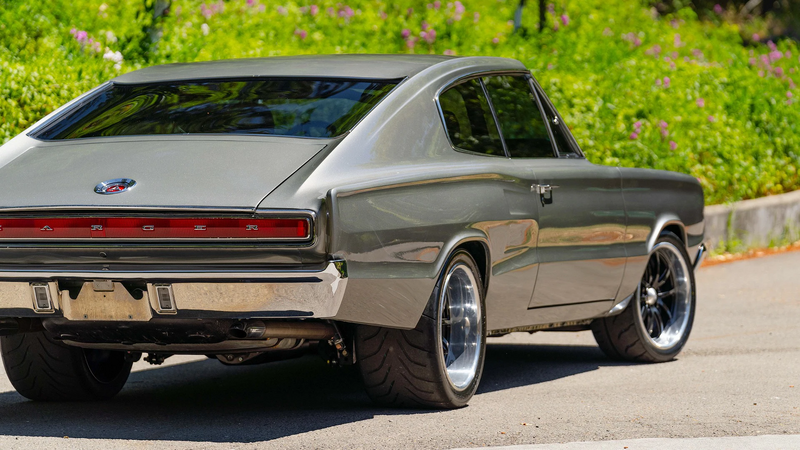
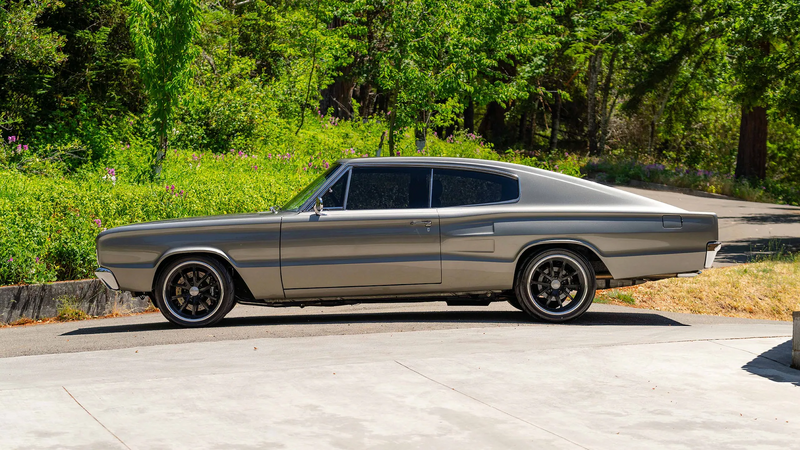
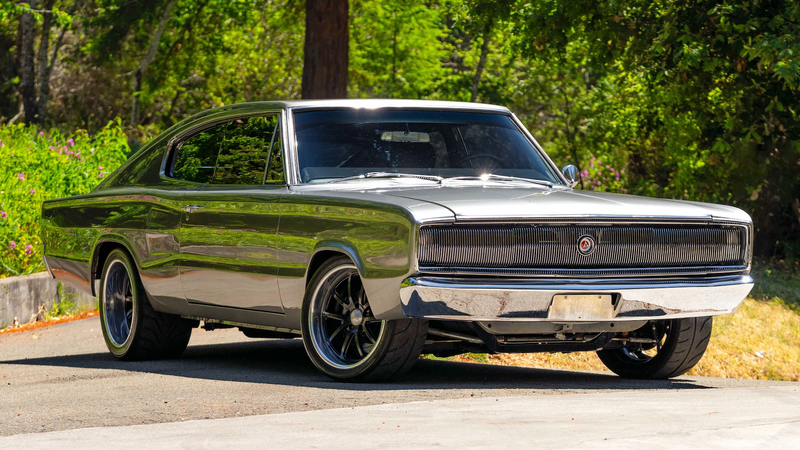
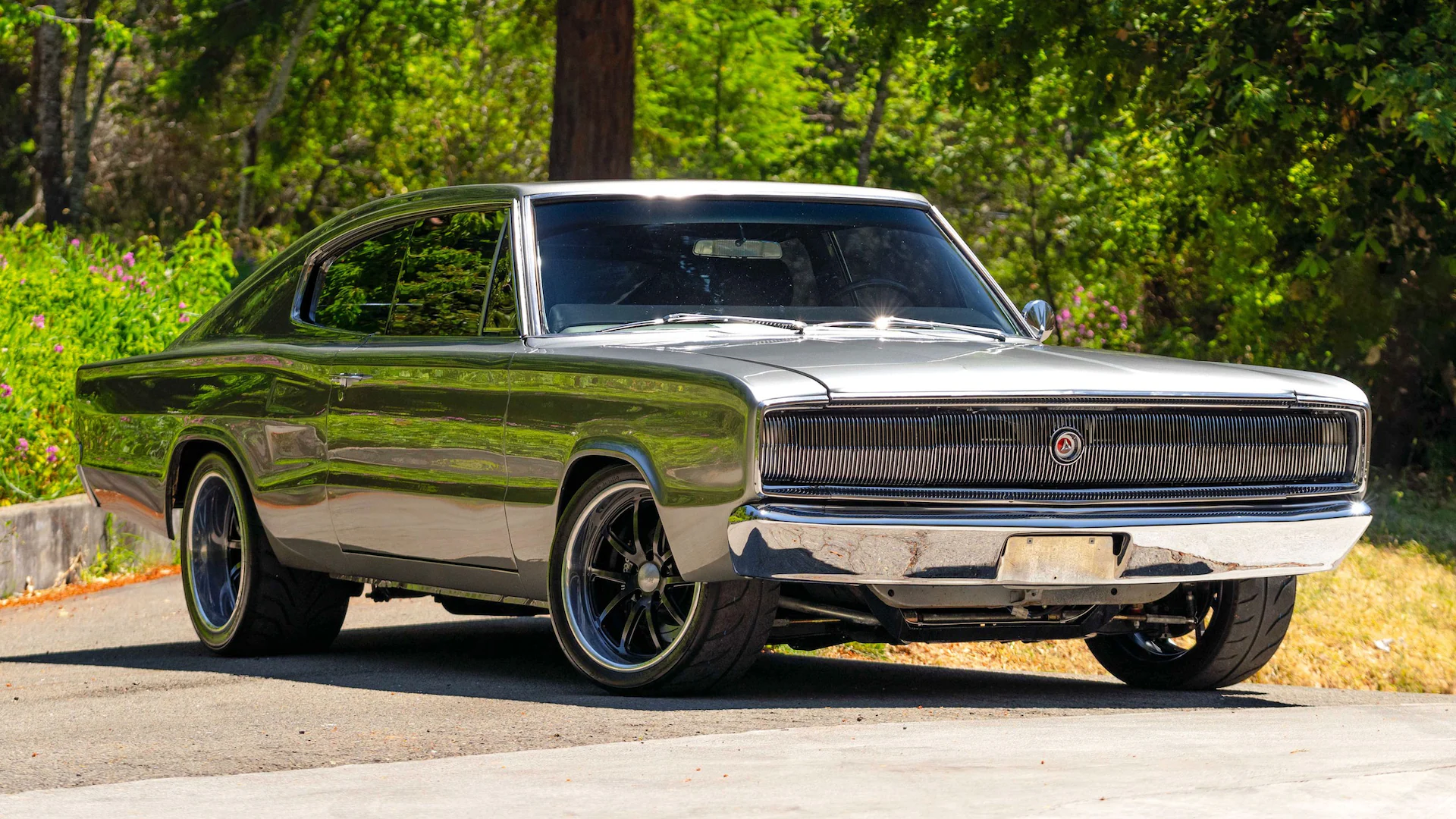
This outstanding example of the unsung 1967 Dodge Charger was Mecum Auctions’ Lot #S18, which failed to sell on Saturday, August 17, 2024, in Monterey, California. The car is an attention-getter today because, thanks to the popularity and outrageous pricing of 1968–’69 Chargers, first-gen models’ “Jetsons” styling (fastback with crisp edges) is accepted more, especially by enthusiasts who want to own something different.
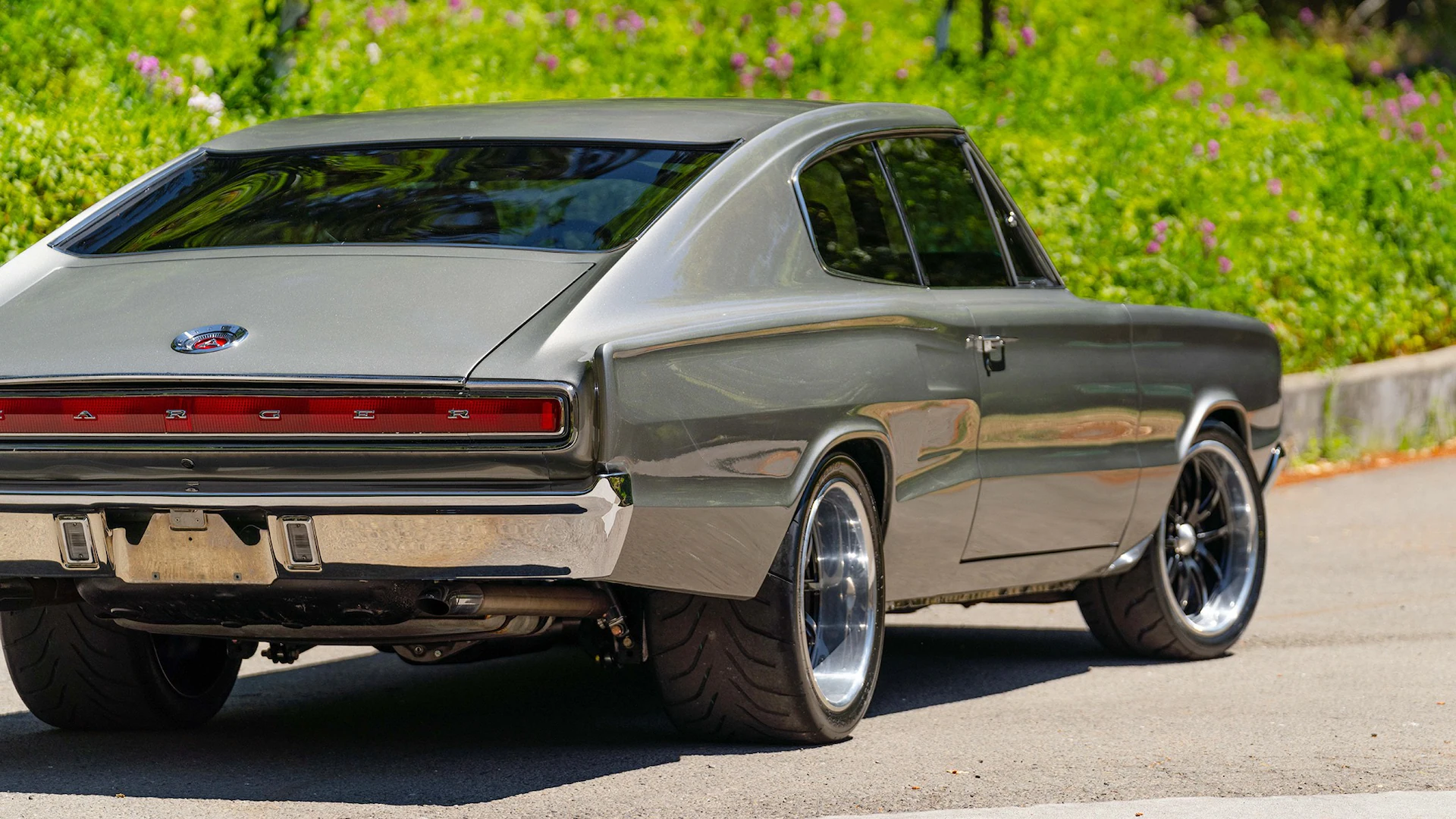
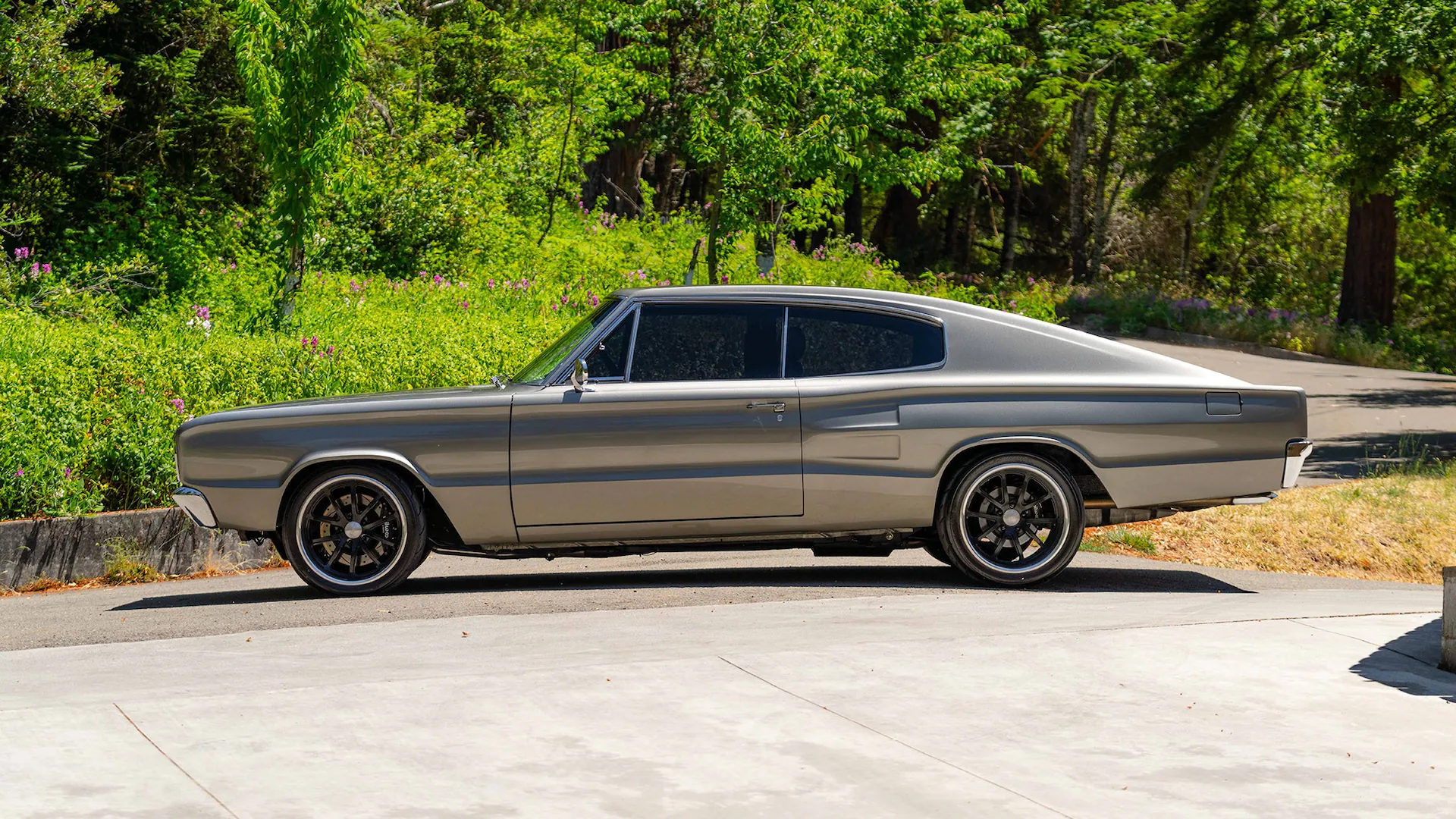
The Charger’s classic look is largely unchanged. Instead of modifying its appearance by reshaping or adding to the body panels and such, its fresh silver paint is complemented by rear minitubs, lowering, a custom K-member, Wilwood disc brakes all around, and a proper staggered Hot Rods by Boyd wheels-and-tires package to improve its physical presence and ride.
Although Hellcat, Hellcrate, and Hellephant-style (supercharged 6.2- or even 7.0-liter Hemi engine and eight-speed automatic transmission) powertrains are the latest rage for new-meets-old Mopar resto- and retromodding, this car’s motivation remains true to its iron-block/pushrod roots.
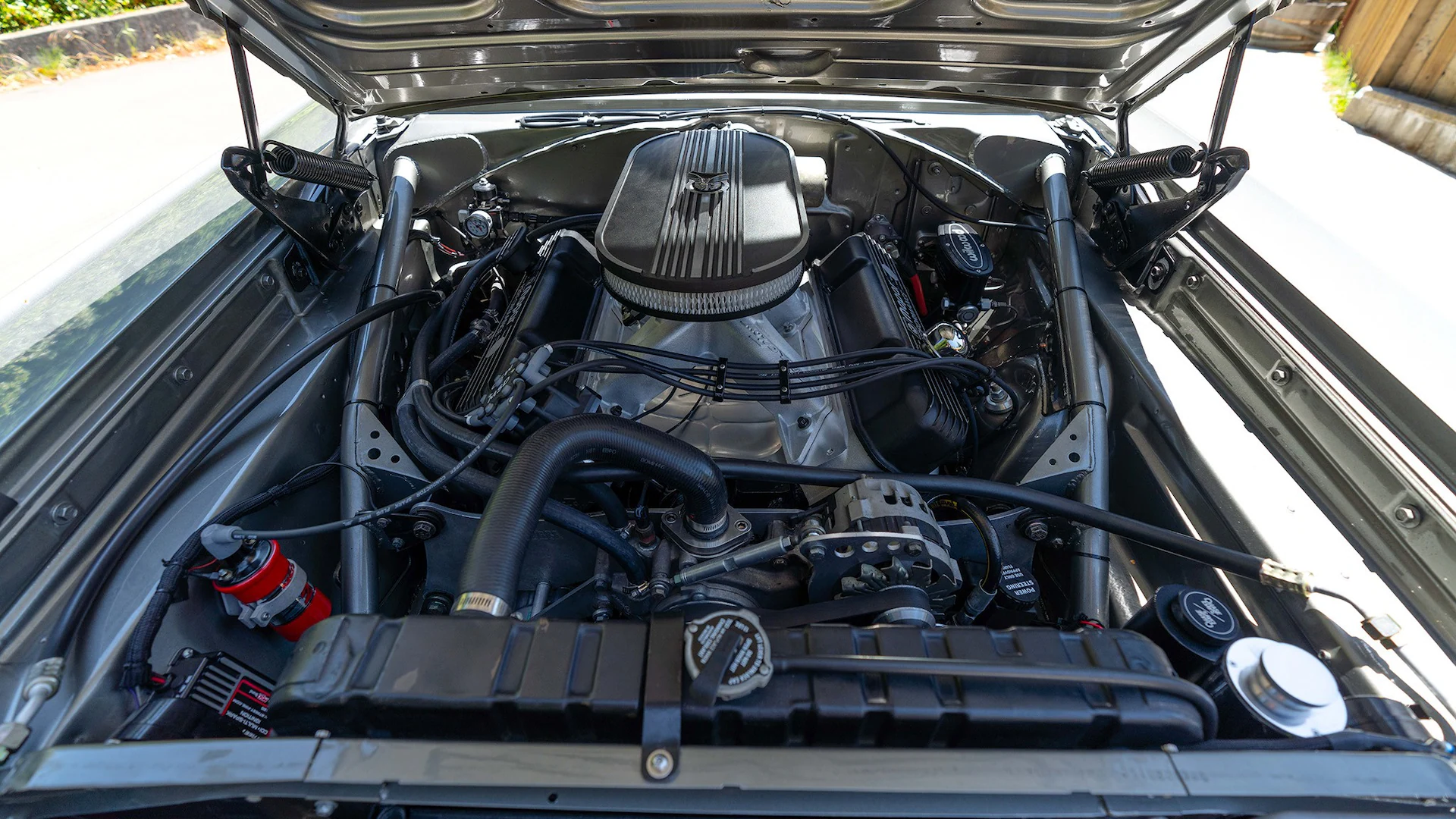
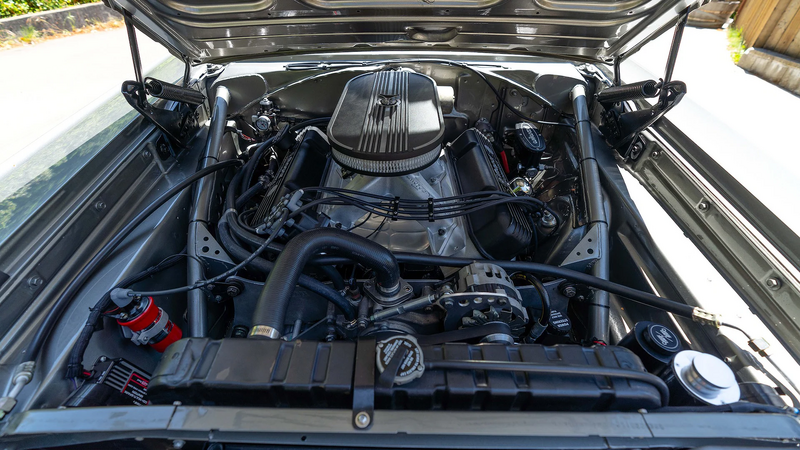
The 440 Magnum now measures 547 cubes and is comprised of a forged 4340 crankshaft and H-beam rods, Diamond Pistons’ forged slugs (10.8:1 compression), a hydraulic-roller cam, roller rockers, and TrickFlow aluminum cylinder heads.
A four-barrel carburetor is gone, and fuel injection is the new-era touch for this bullet, as Holley EFI’s carb-appearing Stealth unit feeds a single-plenum intake manifold. Headers send exhaust away through dual pipes.
Driveline closure comes by way of a 727 TorqueFlite automatic transmission (with Gear Vendors overdrive), and a Strange Engineering Dana 60-type rearend.
The Charger’s interior features more of the same; OG components and flair with modern gear tastefully added. There’s a rollcage that extends into the engine compartment, and the quad bucket seats and front/rear center-consoles setup that are all finished in black leather with red contrast stitching.
The stock shifter remains, but “custom” prevails throughout the remainder of the cabin and in a secret compartment in the trunk where a radical audio system consumes every inch of space.